Where it all started
In the early days of a startup, design rarely comes first. Teams are small, budgets tight, and most of the energy goes into shipping. That’s where Baserow was when I began collaborating with them over three years ago.
Our work started under Widelab’s Product Designer Retainer model - a flexible setup where startups gain long-term access to a dedicated product designer who integrates directly with their company. The model offers predictable costs, seamless collaboration across time zones, and the ability to scale design involvement up or down as the product grows,. all without the overhead of a full-time hire.
In this article, I want to share what that looks like from the inside, as a personal story from my seat at the table. I’ve been designing alongside Baserow’s developers and founder for almost three years, seeing the product evolve release after release. I’m still the only designer on board, shaping the product day by day in a partnership that keeps growing and changing with every new challenge.
One designer among developers
Being the only designer in a team of engineers forces you to stay pragmatic. Design discussions are short, focused, and tied to what’s being built. Every idea gets tested in real time, directly in collaboration with the people writing the code.
Over time, this rhythm becomes second nature. Design turns into part of the shared language rather than a separate discipline.
A relationship that grows
The partnership has now lasted for nearly three years of continuous work. It began with a complete redesign and design system overhaul, and it keeps expanding into new areas of the product.
Our workflow stays simple: async standups, Figma comments, and focused calls with the founder or developer. We adjust priorities as needed, often guided by Baserow’s ever-growing community of users - from refining existing flows to designing entirely new product areas.
Designing the foundation
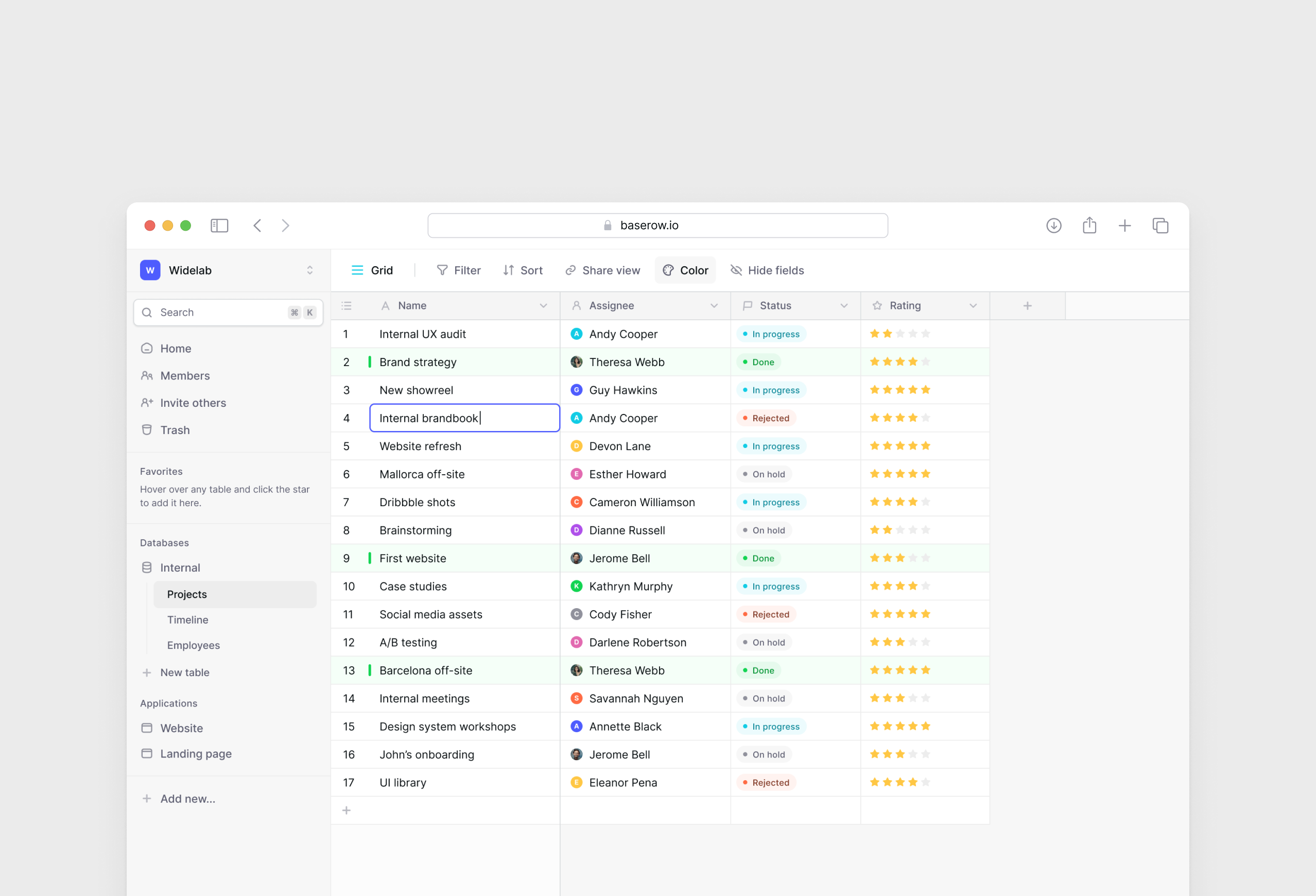
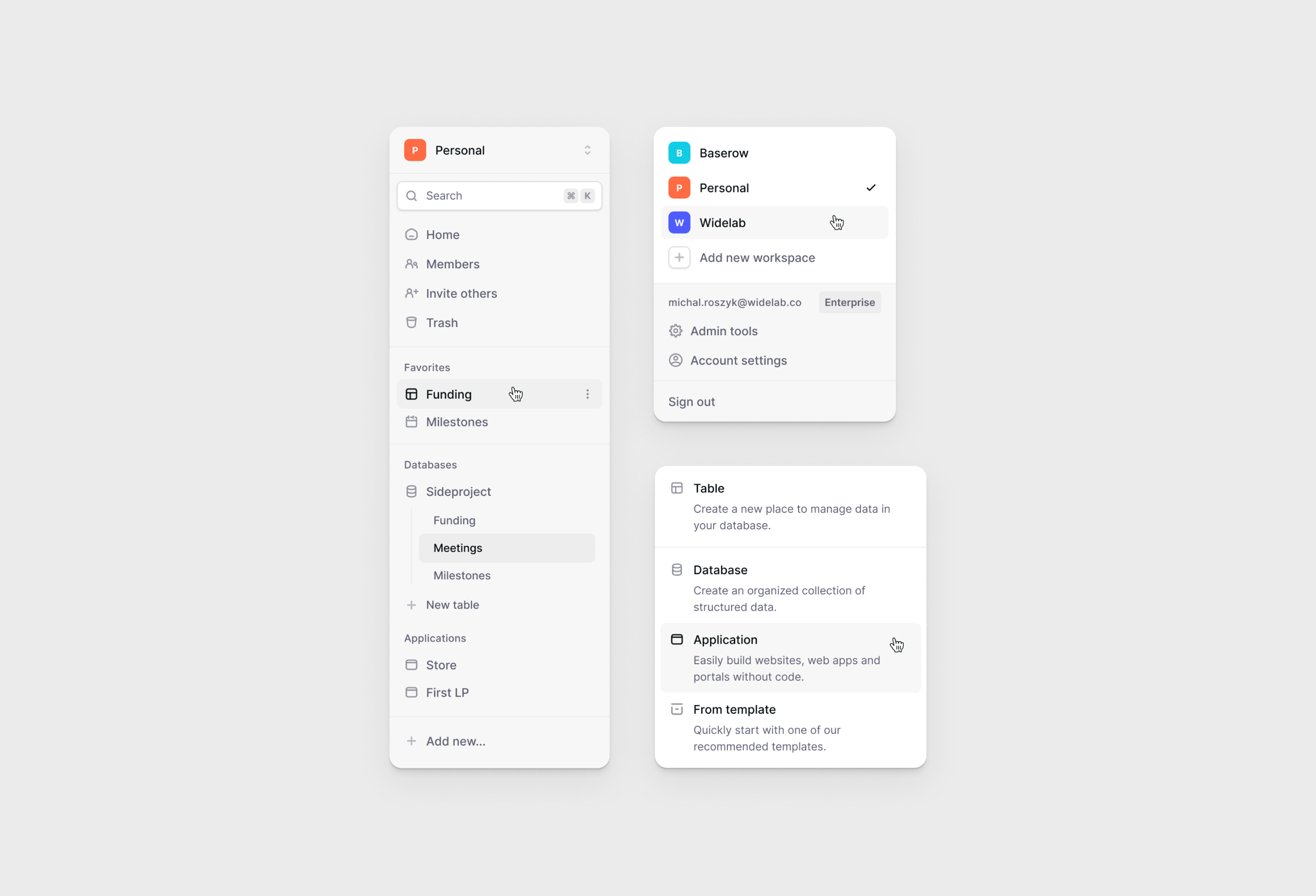
The first step was building a new design system - a starting point for all the work ahead. That came with an unusual constraint: every font, icon, and asset needed to be open source due to the product’s open and secure nature. Finding a visual language that worked within those limits required careful research and testing.
That foundation now supports everything we design, keeping the experience consistent across the app, website, and brand materials.
Iterating and expanding
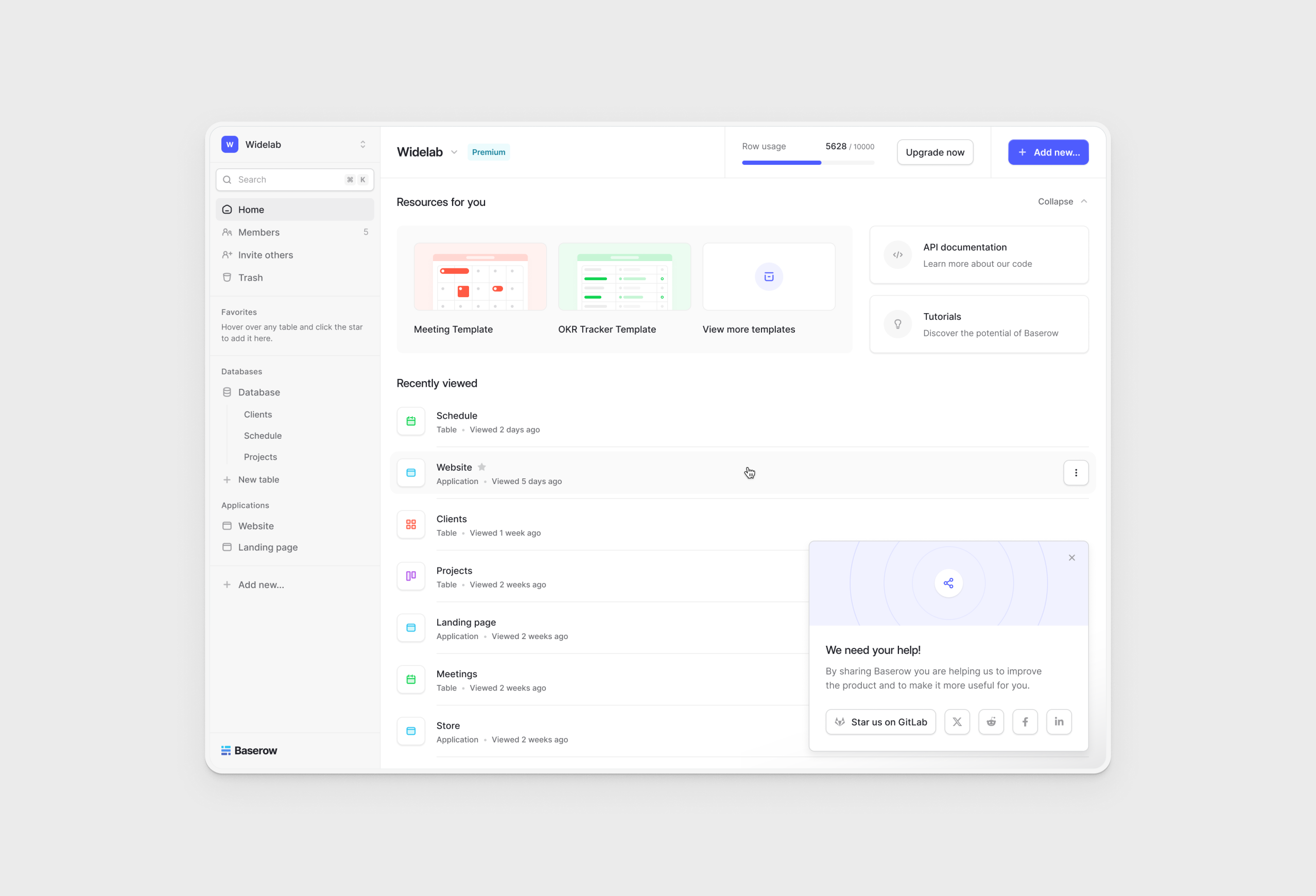
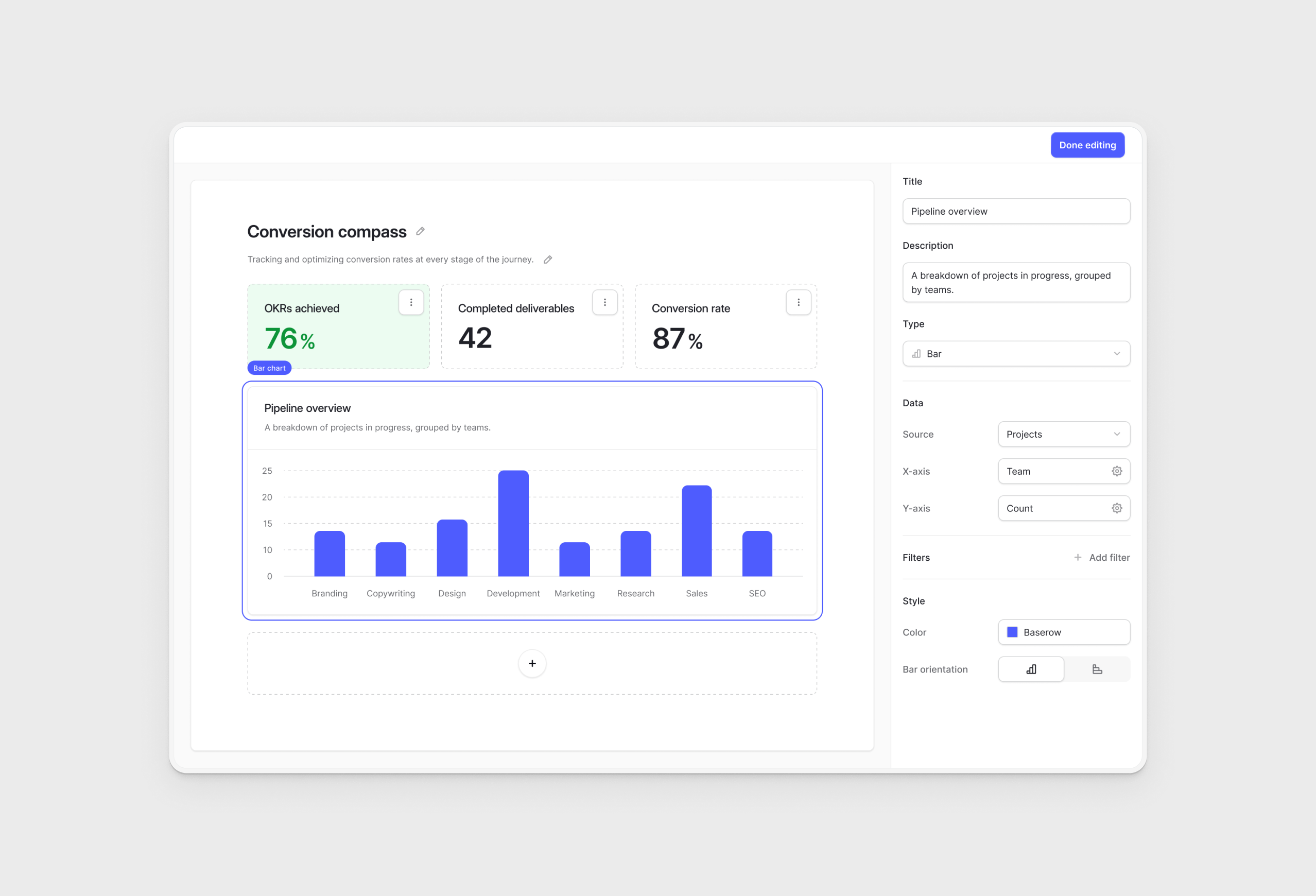
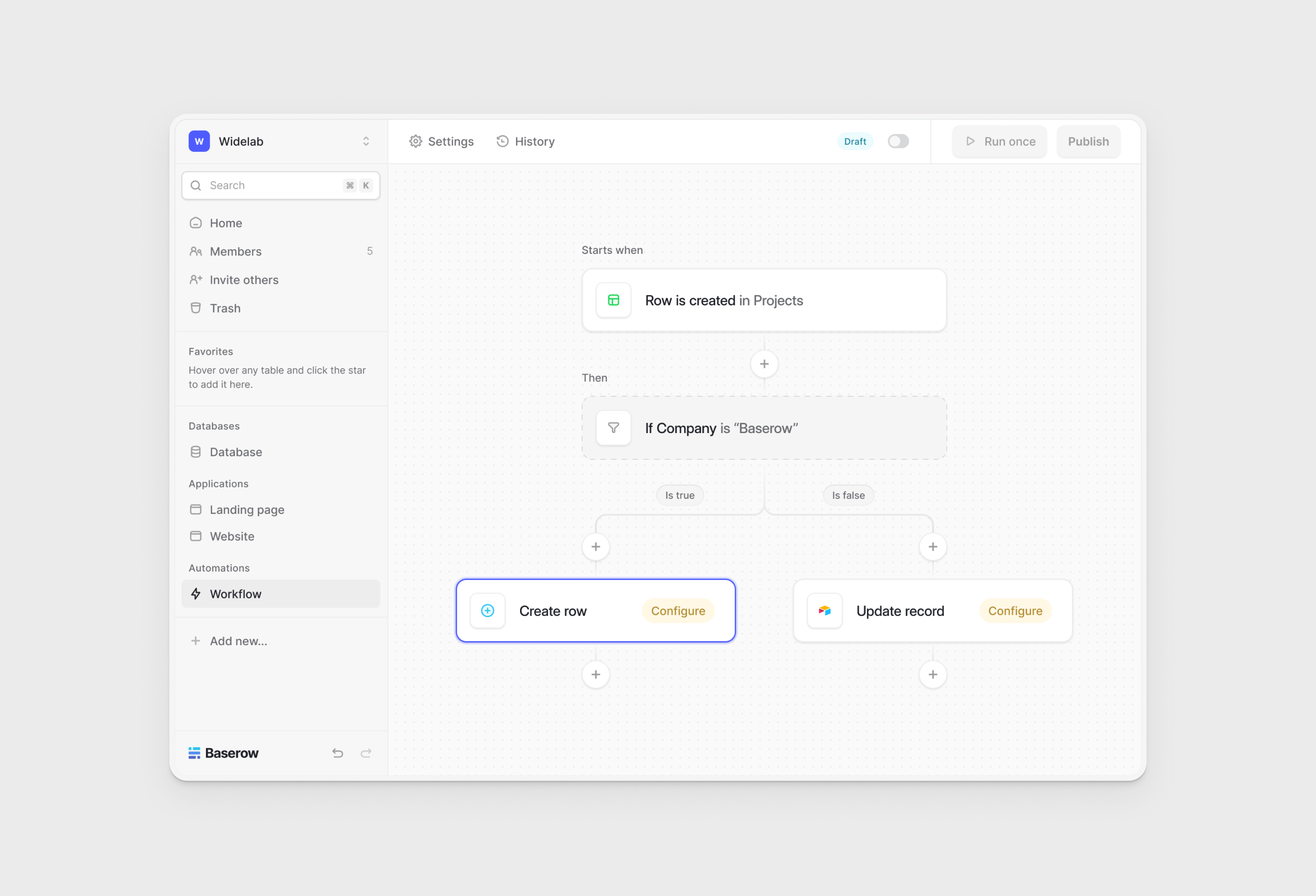
Since then, we’ve introduced major features such as Application Builder, Automations, Dashboard Analytics, and the AI Assistant. Each of them presented new challenges and required a fresh look at user needs.
Long-term design involvement allows me to spot patterns and anticipate edge cases. The product has many moving parts, and consistency only happens when someone is there to guard it every day.
Beyond the product
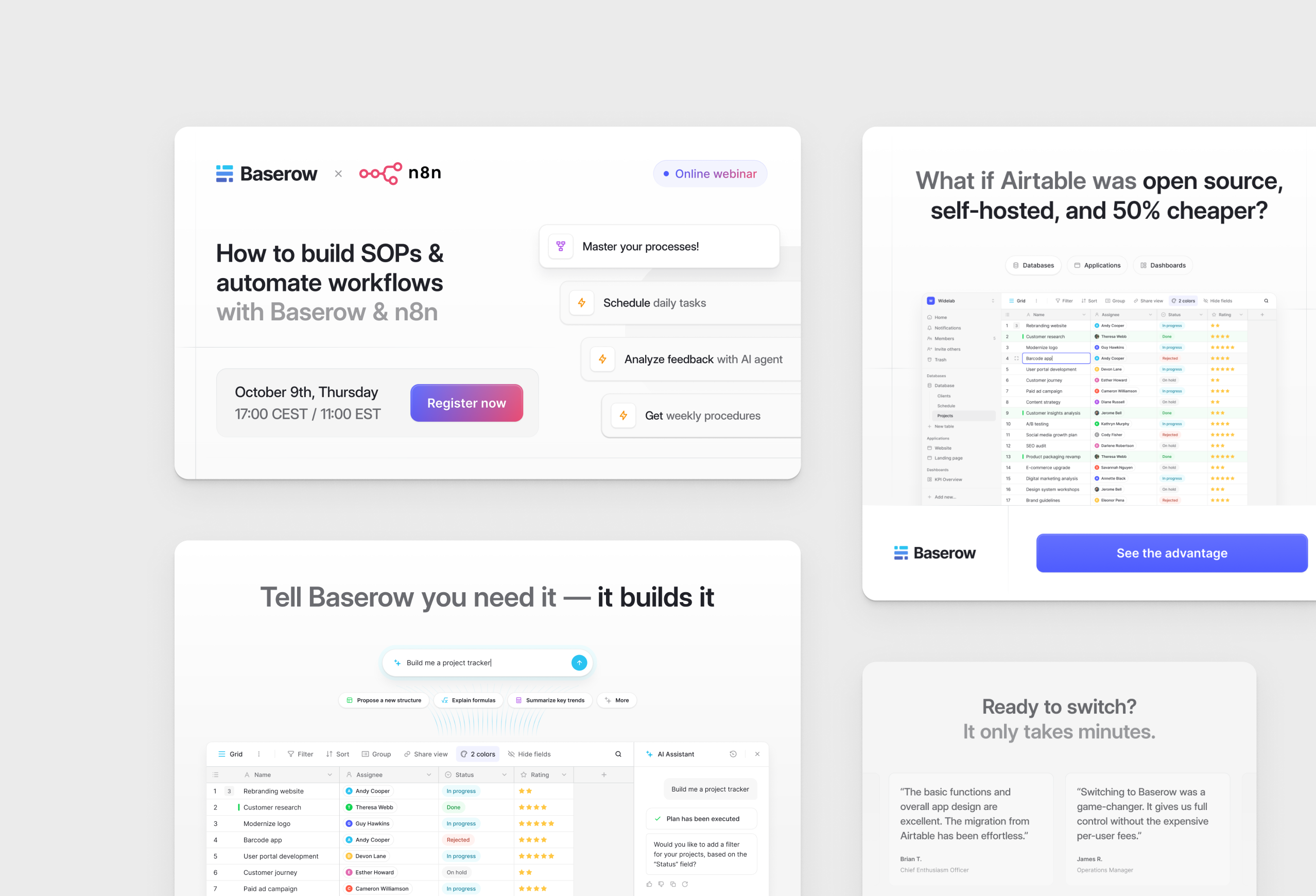
Being part of the team also means contributing beyond the core app. I support Baserow with web design, marketing visuals, investor decks, and other brand materials. These touchpoints shape how the company presents itself to the world, and aligning them with the product design keeps the story coherent and authentic.
Inside the team
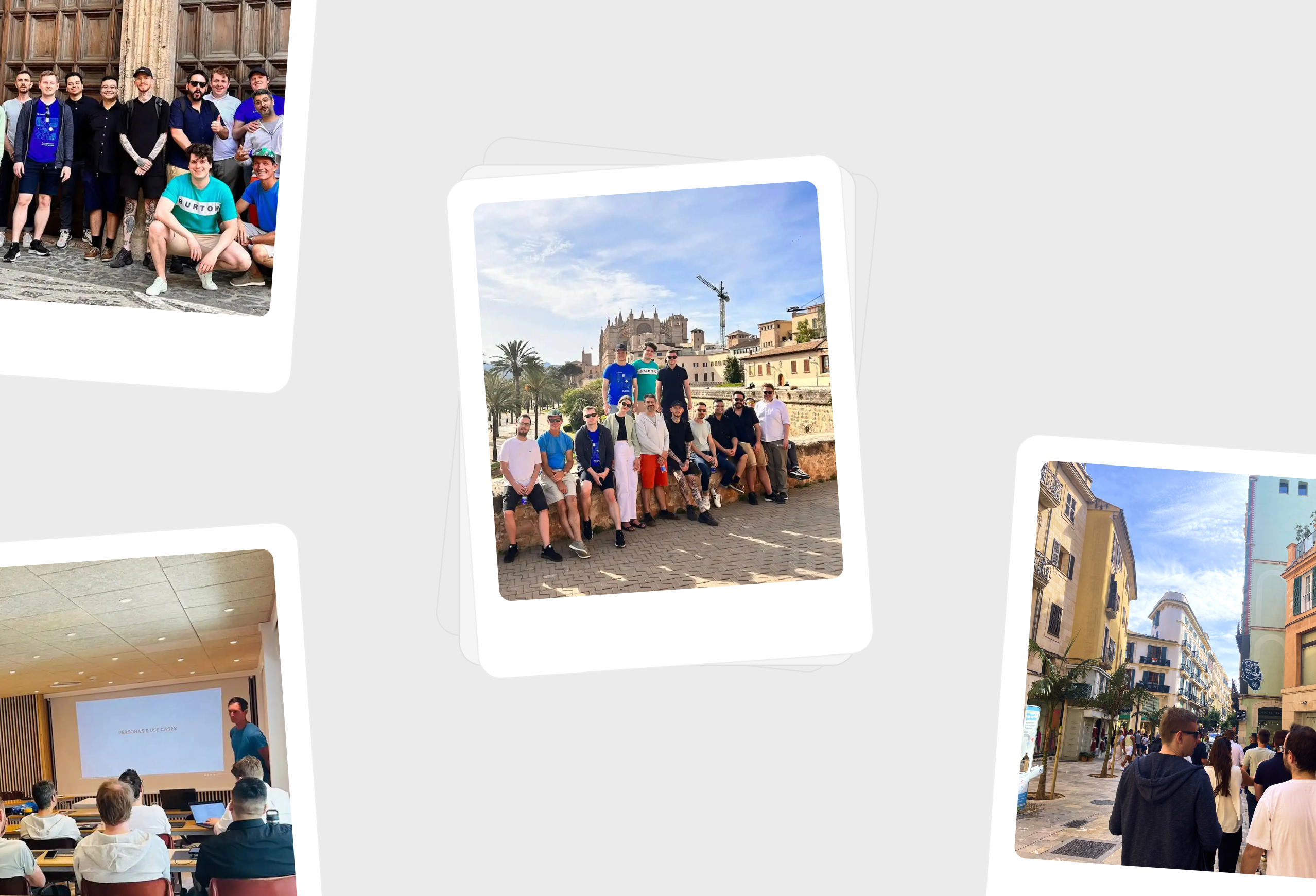
Trust builds slowly but steadily. I take part in weekly demos, company meetings, and even team retreats. The closer I am to the people, the more context I get - and the better the design decisions become.
There’s something rewarding about watching a product grow and knowing you’ve helped shape every stage of it.
Why this model works
For early-stage startups, hiring a full-time designer can be hard to justify. An embedded designer from an agency like Widelab gives them a middle ground: senior-level expertise, flexible involvement, and a partner who works as part of the team rather than an external vendor.
This setup scales naturally. Some weeks focus on benchmarking and refining the UX writing, others on shipping new UI patterns or improving onboarding. The scope shifts depending on what the product needs most at a given moment, but the design presence stays constant.
The reward of the long game
Being Baserow’s extra team member has been one of the most fulfilling experiences of my career so far. It shows that meaningful design work happens through persistence, not grand gestures. Through this collaboration, I’ve also gained a close-up view of how real startup challenges unfold - from product trade-offs and business decisions to funding strategies and long-term growth planning.
For founders wondering when to bring in a designer, the answer is simple: as early as possible. And when you do, bring in someone ready to understand your product from the inside out.

.png)