.png)
Every digital product has that vital layer of experience: research, flows, interface, and the design system that decides how it feels to use. When you’re picking a UX UI design agency, you’re making a choice about who owns that layer and how much rides on getting it right. Make the right choice, and you’ve got senior thinking at your disposal, removing risk before the roadmap - but pick on price or slick portfolios alone, and any savings tend to resurface as rework, churn, or redesigns.
This guide walks you through when to hire, what to check, where budgets leak unnoticed, and a 2026 checklist you can run your shortlist against.
What a UX UI design agency does
The truth is, the label is a little slippery. Terms like "agency," "studio," "firm," and "company" get thrown around by plenty of teams that call themselves a design partner and then leave you in the dust when it comes time for development. Or branding shops that hand you a logo and then split. Scope matters more than the word.
A true UX UI design agency crafts the experience and interface layer of a digital product: the user research, information architecture, user flows, wireframes, visual interface, and design system. The strongest partners own that layer from start to finish, beginning at the research phase through to developer handoff.
Sometimes it helps to separate the two halves. UX is the structure: how a task breaks into steps, what happens at each one, and whether people can finish it without friction. UI is the surface: the visual language, hierarchy, states, and details that make a structure legible and trustworthy. Any good team will treat them as one job, because beautiful screens over broken flows still fail, and great flows with rubbish interfaces lose trust.
In-house vs outsourcing: when to bring in an agency
Start with asking yourself an honest question: does this work justify a permanent hire, or does it need senior capacity for a defined stretch?
An in-house team earns its keep when your project is continuous and central, so like a mature product with a steady stream of features coming out, a roadmap that never pauses, or enough volume to keep your designers busy each week. Owned context compounds, and the team has to deal with the consequences of its decisions.
An external team makes sense in a different scenario. You have a spike of work that doesn’t warrant a full-time hire, or you’re building a new product that needs the expertise of people who’ve shipped that kind of thing before. Maybe you need an outside perspective on something your own team is a bit too close to, or you need skills you don’t have yet - like a full design system or research and testing practices.
Hiring senior designers can be really slow and expensive. A single hire gives you one point of view. Recruitment goes on for months before anyone touches the product, and when the new person comes in, they’re carrying every skill gap by themselves. Not to mention the ramp costs, because they need time to learn you, your product, the users, their job, your codebase, everything, before any of their output justifies the salary. A UX UI design agency gives you ready players waiting on the bench: a researcher, US designer, UI designer. They have systems people who solve this problem in their sleep, across different industries. A cross-industry view is what an internal team, by definition, cannot hand you.
The two models aren’t exclusive. The most durable arrangement is usually a hybrid, where an outside team works as an extension of your own - rather than a vendor at arm's length. Widelab has run this model with CloudKitchens for three years now, with our designers working alongside the internal team on shared initiatives and projects. They get senior capacity, we get deep context on their product, it’s a win-win. If design is going to stay important to you (and it should), look for a partner that can flex into shape and stays as you scale.
What to look for when choosing a UX UI design agency
Once you know you want a partner, evaluation comes down to four things: what they’ve already shipped, how they work, who you get, and whether the work is built to last.
Portfolio depth, not gallery gloss
A reel of polished shots proves someone can make a frame look great, but it doesn’t prove they can make products. Look for live work with complexity, like multi-platform systems carrying dense data, admin tools, edge cases, and unglamorous screens.
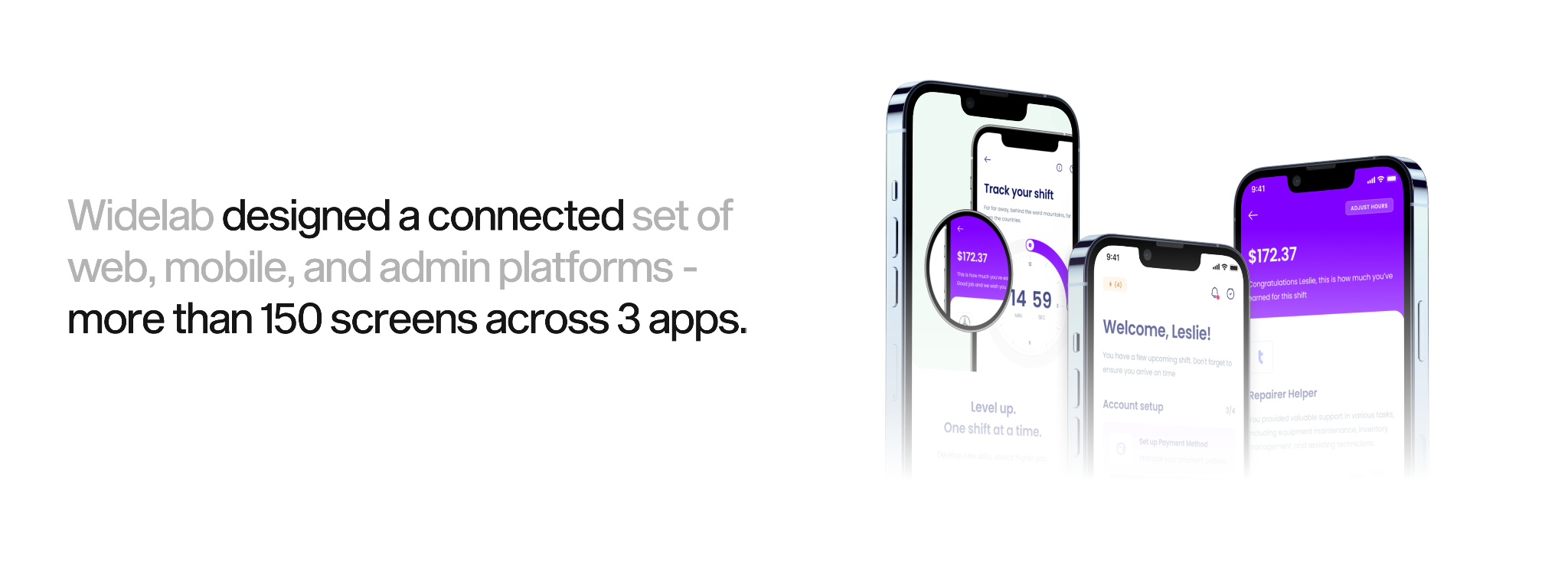
For example, with Traba, a workforce management company, Widelab designed a connected set of web, mobile, and admin platforms - that meant more than 150 screens across three applications. The work continued as a relationship while the product grew. For Minnow, an analytics platform, the work ran past 100 screens of data-heavy interface, where the challenge was making complex streaming statistics readable at a glance. For Traineffective, a mobile app for young footballers, the engagement was tighter: a clear visual direction and a set of core screens, proof that a strong partner scales down as cleanly as it scales up.
A real process, not a pile of deliverables
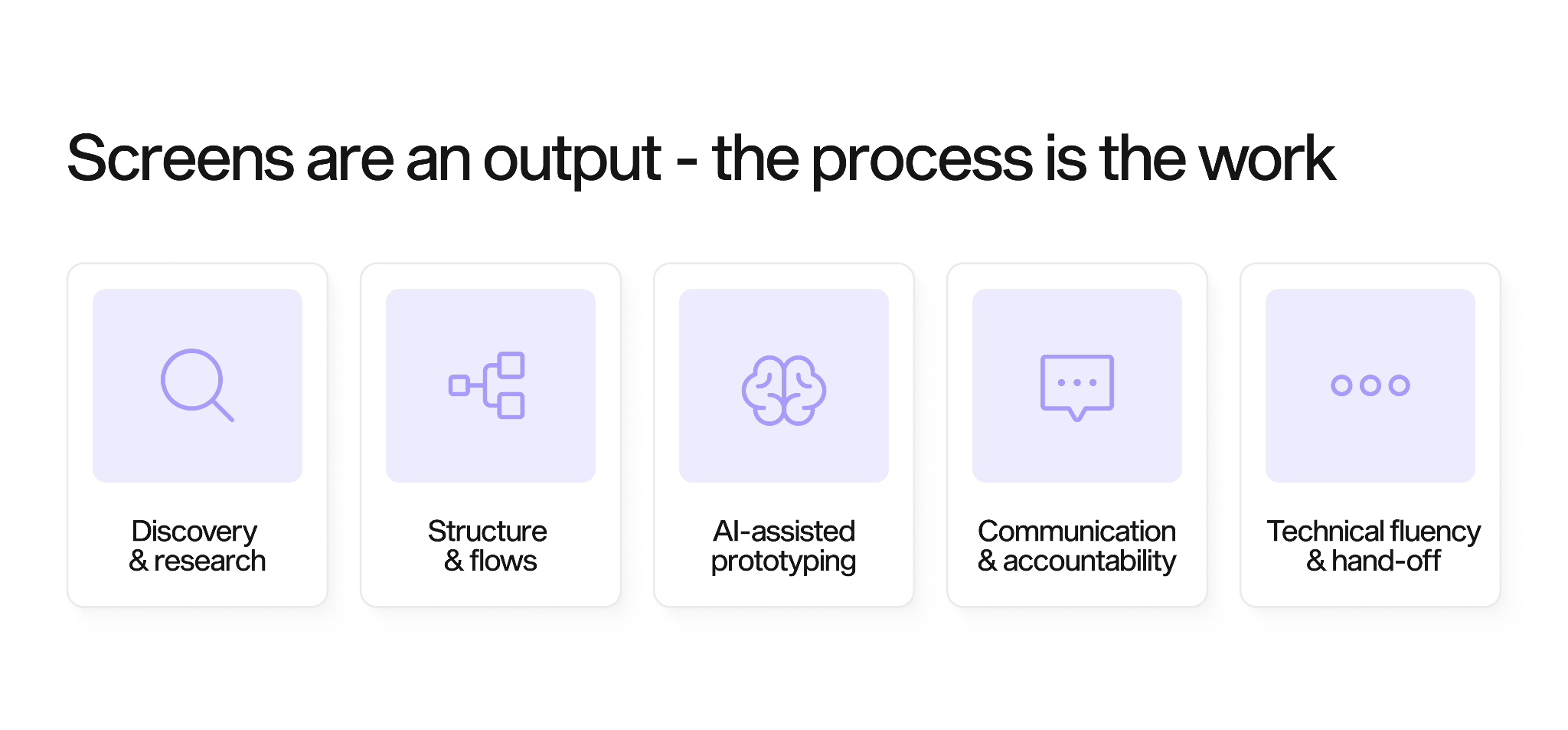
Screens are just an output. It’s the process that determines whether they work, and any credible partner will show you how they go from problem to interface. That’s the process of discovery and research, structure and flows, wireframes before visuals, testing with real users, and a QA step where designers and developers reconcile the build against the design. If a pitch jumps straight to visuals with no research or testing in sight, you’re just buying decoration and inheriting the risk.
This is also where you protect your budget, because testing a flow with users before it reaches engineering costs far less than discovering the problem in production. Widelab's own rule of thumb is that development can always cost many times more than the design it’s based on - but it shouldn’t. Which is why the validation happens early. Services like product discovery and user testing exist to move that risk forward, where it’s cheap to fix.
Handoff deserves its own scrutiny. A strong UX UI design agency ships engineers a spec they can build from without a dozen follow-up questions: documented components, states and edge cases, spacing and type tokens, and a channel to resolve the gaps that always surface during the build. Ask a shortlisted team to show you what a developer receives at the end. The answer separates the teams that think about the build from the ones that stop at the pretty picture.
Communication and the people you get
Sales pitches feature the principals, and then you get to delivery, and find the people who happened to be free. So before you sign, confirm who does the day-to-day work, how senior they are, and how the team communicates when something goes off-script. The partners worth keeping flag problems early instead of delivering a surprise at the end. Ask how often you’ll meet, who owns decisions, and what happens when a designer is out. A high designer retention rate is a quiet signal here: it means the person who learns your product is likely to still be on it in six months.
Design systems and scalability
A one-off set of screens ages badly. A design system turns your interface into components your team can reuse, extend, and hand to engineers without re-litigating every decision. If your product grows, ask whether the team builds for ownership and scale or delivers static files. It could be the difference between buying a design and buying the ability to keep designing. Product designers like our own Michał Roszyk sometimes spend three years or more working directly with clients like Baserow’s team on their product.
The hidden costs and risks that burn your budget
Most budget damage doesn’t come from the agency's rate, but from choosing the wrong scope and paying for it down the line.
The classic trap is a cheap proposal: screens only, light on research, thin on handoff. Wins on price, but then the cost creeps in somewhere the quote never mentioned. Engineers lose weeks asking questions the design should’ve answered, or support fields the same confusing flow every day, and before you know it, you’re sitting down to the redesign invoice you never wanted to pay. A fix that’s cheap at conception grows expensive once it’s code - and more expensive again after release. Engineers call it the 1:10:100 rule. Exact numbers are a rule of thumb, not a law, but every team that’s shipped products knows the shape.
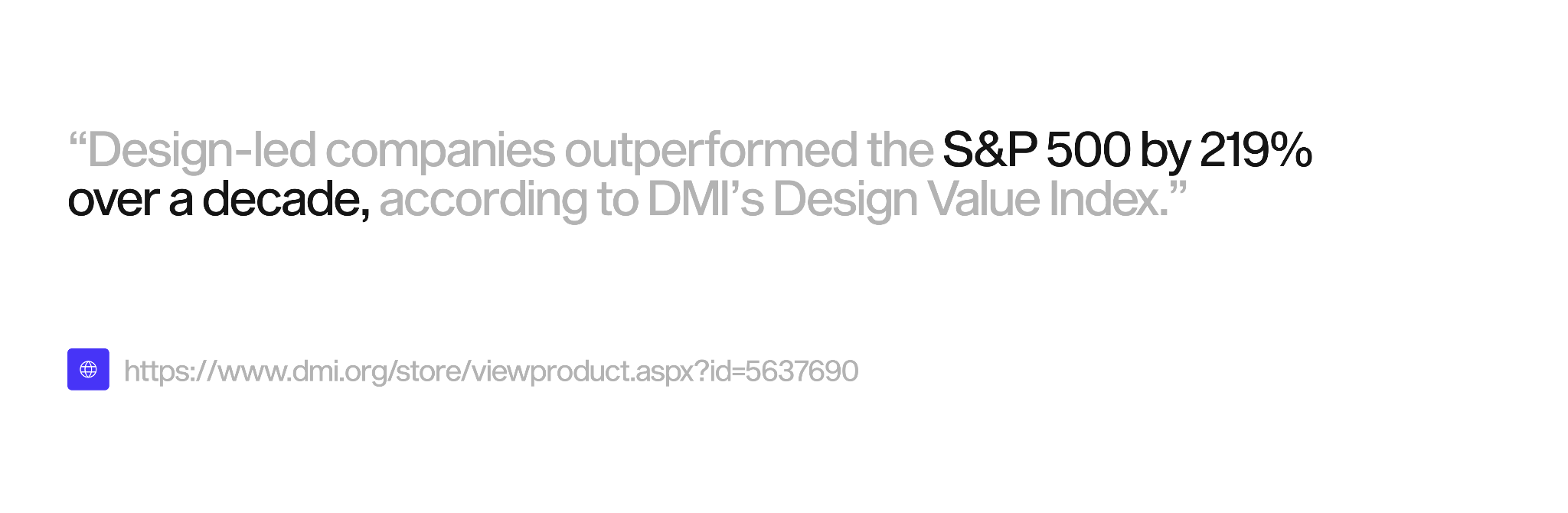
The upside is as real as the downside. Design-led companies outperformed the S&P 500 by 219% over a decade, according to DMI’s Design Value Index. A frequently quoted Forrester figure puts the return on user experience investment as high as $100 for every $1 spent; treat the precise multiple with caution, since it traces to an old paid study, but the direction isn’t disputed. Interface and usability scale beautifully when done well.
Watch for these red flags while you evaluate:
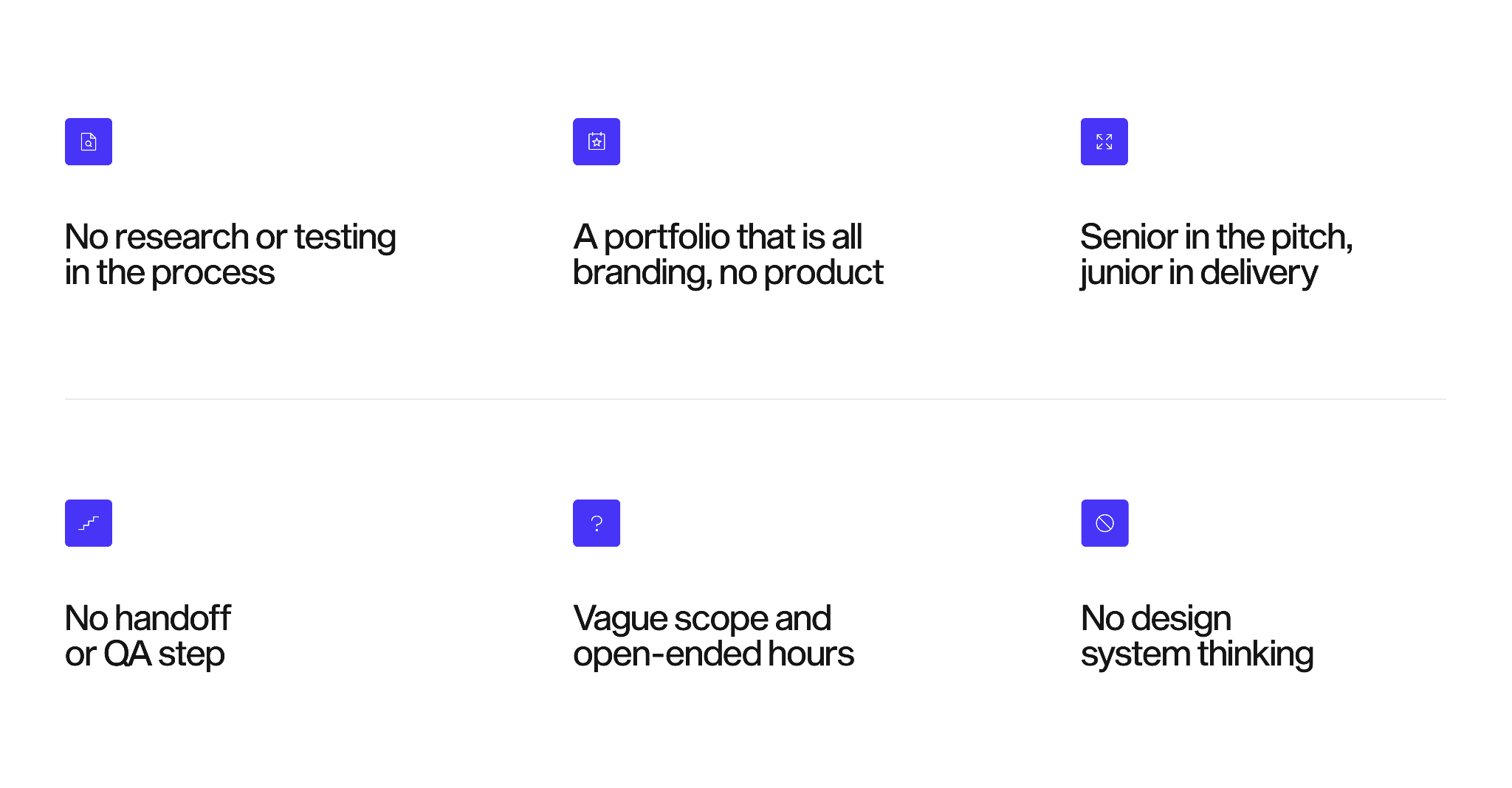
- No research or testing in the process. Design by assertion, not evidence.
- A portfolio that is all branding, no product. Logos and landing pages don’t prove product design ability.
- Senior in the pitch, junior in delivery. Confirm the named team in writing.
- No handoff or QA step. This is where budgets quietly bleed into engineering time.
- Vague scope and open-ended hours. Ambiguity resolves in the invoice's favor.
- No design system thinking. Fine for a one-page site, a problem for anything that will grow.
Scope ambiguity is the quietest of these risks, and realistically, the most expensive. Any proposal that says "UI design for the app" without listing screens, states, platforms, and revisions, well - it leaves every boundary open to interpretation, and interpretation costs money. The fix is boring, but really effective: insist that the statement of work names what’s in, what’s out, and how change requests are priced before anyone starts.
If you inherited a product that already has these problems, a focused UX audit by a solid UX UI design agency is usually a cheaper first step than a full redesign, because it tells you where the real damage sits before you spend.
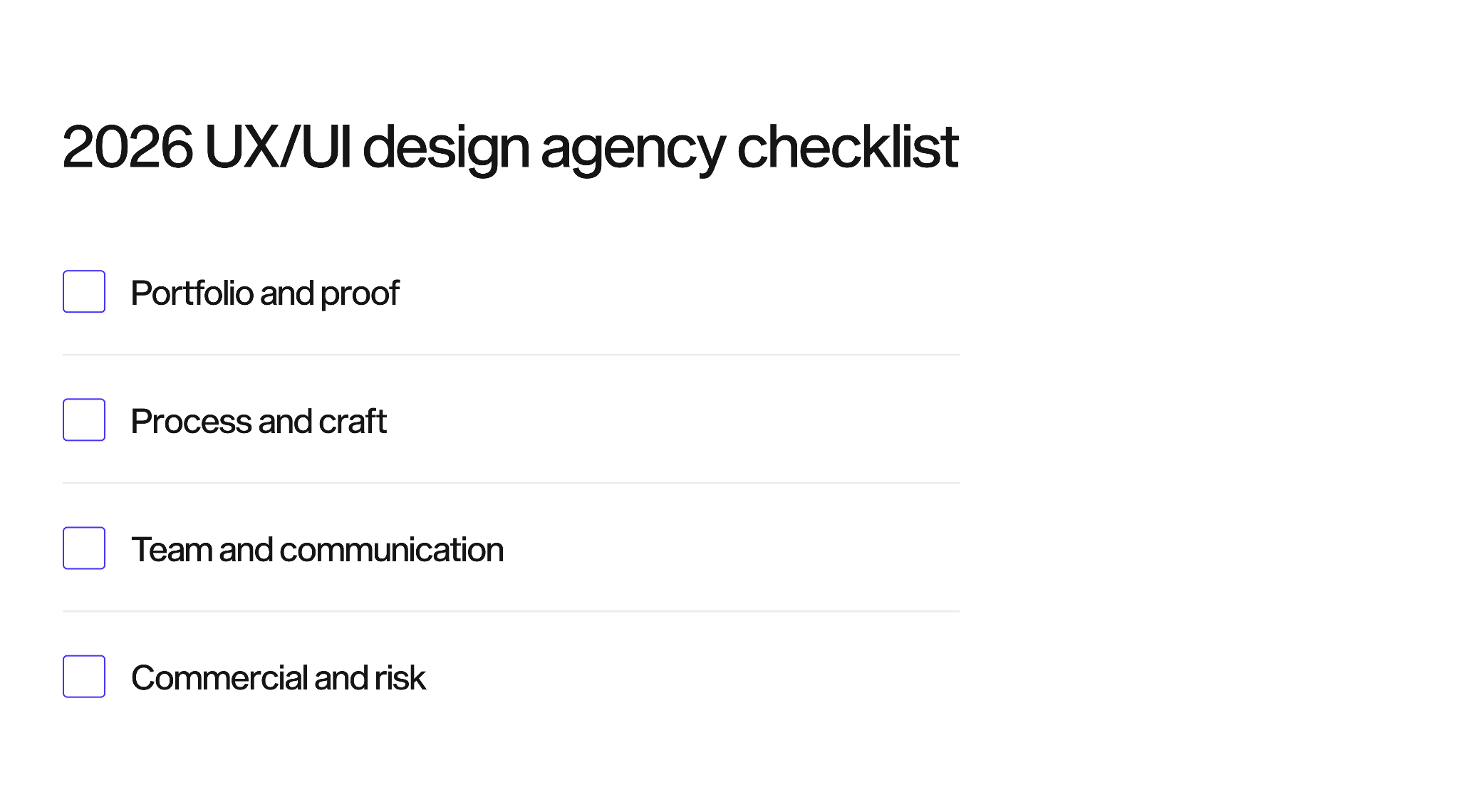
The 2026 UX UI design agency evaluation checklist
Run every shortlisted team through the same list. Score each item, compare like for like, and do not let a strong portfolio paper over a weak process.
Portfolio and proof
- Shipped products with real complexity, as well as concept work
- Case studies in or near your industry or product type
- Evidence they handle multi-platform, data-heavy, or admin-side interfaces
- References you can speak to directly
Process and craft
- A clear path from research to flows to wireframes to UI, with testing built in
- A QA and developer handoff step
- Accessibility treated as a standard, not an upsell
- A design system approach for anything that needs to scale
Team and communication
- The senior people in the pitch are the people working on the project
- High designer retention, so your product knowledge doesn't walk out the door
- A clear cadence for meetings, decisions, and problem escalation
- They challenge your brief instead of blindly executing it
Commercial and risk
- Scope, assumptions, and exclusions are written down
- A model that flexes from project to ongoing partnership if you need it
- Pricing you can map to outcomes
- 2026 specifics: AI-assisted workflows that raise speed and quality, and accessibility compliance as regulation tightens
Clear every group and you’re choosing on fit and price rather than on risk. That’s a good position to negotiate from.
UX UI design FAQ
How much does a UX UI design agency cost?
That’s dictated by scope and engagement model. Work is often priced by senior capacity booked per month, such as half-time or full-time on your product, rather than a fixed per-screen rate. A focused piece of UI design sits at one end; a multi-platform system with research, testing, and a design system sits at the other. The useful comparison isn’t the day rate, it’s the total cost including the rework a weaker partner leaves behind.
What’s the difference between a UX UI design agency and a product agency?
They overlap, and the terms are used loosely. A UX/UI design partner centers on the experience and interface layer: research, flows, UX design, UI, and design systems. A product design agency usually frames the same work inside a broader product remit, including strategy and roadmap. If you specifically need the interface and how it performs, the UX/UI framing points you at the right teams.
How long does a UX UI project take?
A single flow or a small set of core screens can take a few days, or weeks. A full product across web and mobile, with research and a design system, runs across weeks and months and often becomes an ongoing relationship as the product evolves. Any partner should give you a phased plan rather than one opaque number.
Do I work with a designer directly?
With a good partner, yes. Look for direct access to the designer on your product, backed by a project manager when the work needs multiple skills. Layers of account management between you and the person making decisions slow everything down.
Should I hire in-house or use an agency?
Hire in-house when design is continuous and high-volume enough to keep a team busy. Use an external partner for spikes, new builds, redesigns, or capabilities you do not yet have, and consider a hybrid where they run as an extension of your team. Many companies use both, and move fluidly between them as the roadmap shifts.
Choose the partner, not the pitch
The best UX UI design agency for you is the one that owns the experience layer end to end, shows you shipped, complex work, runs a process with research and testing included, and staffs your project with the seniors who pitched it. Price matters, but it’s the smallest number in the equation once you account for what a weak partner costs downstream.
Widelab works this way by design: senior designers who treat your product like their own, a process built to remove risk early, and relationships that last, with over 80% of our clients still working with us two years after the first project. If you’re weighing up a UX/UI design partner, book a call with our team and we’ll walk you through how we’d approach your product.